
Diastasis Recti After Pregnancy: The 3 Exercises You Should Stop Doing (and What to Do Instead)
You're 6, 12, maybe 18 months postpartum. You've done the crunches. The planks. The "30-day flat belly challenge”, but your tummy still looks like you're 4 months pregnant.
It's not your fault. And it may not be a discipline problem.
There's a very good chance you have diastasis recti. This is the abdominal separation that happens during pregnancy when your growing baby stretches the connective tissue down the midline of your tummy. It's normal. It's common. It happens to most mums. It happened to me …more than once.
What's NOT normal is the advice you're being given to fix it and to be honest the lack of advice.
Here, you'll learn:
How to check if you have diastasis recti (2-finger test you can do right now)
The 3 exercises you should stop doing TODAY if you have it
The 3 safe alternatives that actually start the reconnection
When to know it's time to get personalised help
What is diastasis recti?
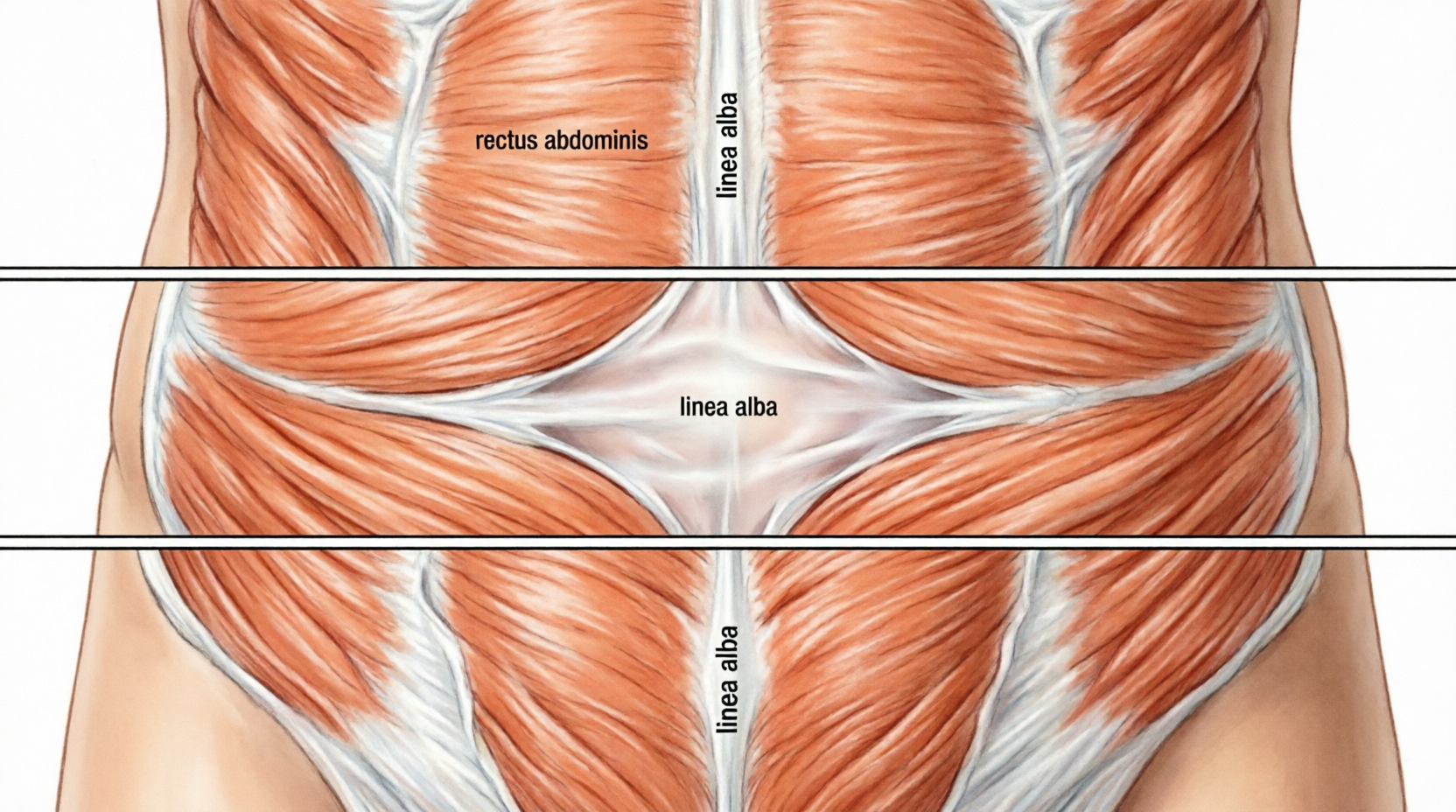
During pregnancy, the two halves of your "six-pack" muscle (the rectus abdominis) get pushed apart by your growing baby. The connective tissue between them called the linea alba stretches and thins.
For most mums, this gap closes naturally within 6-12 months postpartum. For roughly 30%, it doesn't.
Signs you might still have it:
Doming or coning along your midline when you sit up
A persistent "pooch" that doesn't go away no matter what you do
Lower back pain that won't quit
Pelvic floor issues (leaking, pressure, heaviness)
Feeling weak through your core even when you "engage" your muscles.
How to check: the 2-finger test
You can do this right now, sis. No equipment.
Lie on your back. Knees bent. Feet flat on the floor.
Place 2 fingers horizontally just above your belly button.
Lift your head and shoulders slightly off the floor like you're about to starting a sit-up HOWEVER you don’t want your shoulder high off the floor, you want your chin to lead forward more.
Press your fingers gently down into the line running down the centre of your tummy.
A gap of more than 2 fingers wide = diastasis recti.
Now repeat the test below your belly button (and above it again at different heights). The gap can vary along the midline.
If you found a gap read on. Stopping these 3 exercises is the most important thing you can do this week.
Exercise to STOP #1: Traditional sit-ups and crunches
This is the big one. Every time you do a sit-up or crunch with diastasis recti, you're loading the already-separated connective tissue. The muscles on either side of the gap contract and pull AWAY from the midline. The result? The gap stays open or widens.
This is the cruel irony, the move you've been told to do to "tone your tummy" is the one slowing your recovery.
Stop. Today. There are better ways.
Exercise to STOP #2: Front planks (before reconnection)
A standard front plank looks great in theory, it's "core work," right?
With diastasis, a plank means pressure from your organs pushes DOWN through the gap. You'll often see this as doming or coning along your midline when you're in the position. That doming is the warning sign.
Planks are not banned forever. They're banned until you've reconnected the deep core (the transverse abdominis). Once you can fire that muscle consistently, you can build back to planks safely.
Until then, swap planks for the deep core work below.
Exercise to STOP #3: Heavy front-loaded carries (this one's sneaky)
This one isn't in the gym. It's in your daily life.
Carrying a heavy toddler on one hip for hours
Lifting a heavy car seat without bracing
Holding the shopping in front of you with poor posture
Carrying laundry baskets without engaging your core
These daily loads add up. Most mums don't realise they're loading their diastasis every single day.
Fix: brace your core (think: zip up from pelvic floor to belly button) BEFORE you lift. Spread the load across both arms where possible. And give your core actual rehab time during the day, not just in workouts.
What to DO instead: 3 safe rehab moves
These 3 moves rebuild the deep core from the inside out. Do them daily for 4 weeks before progressing.
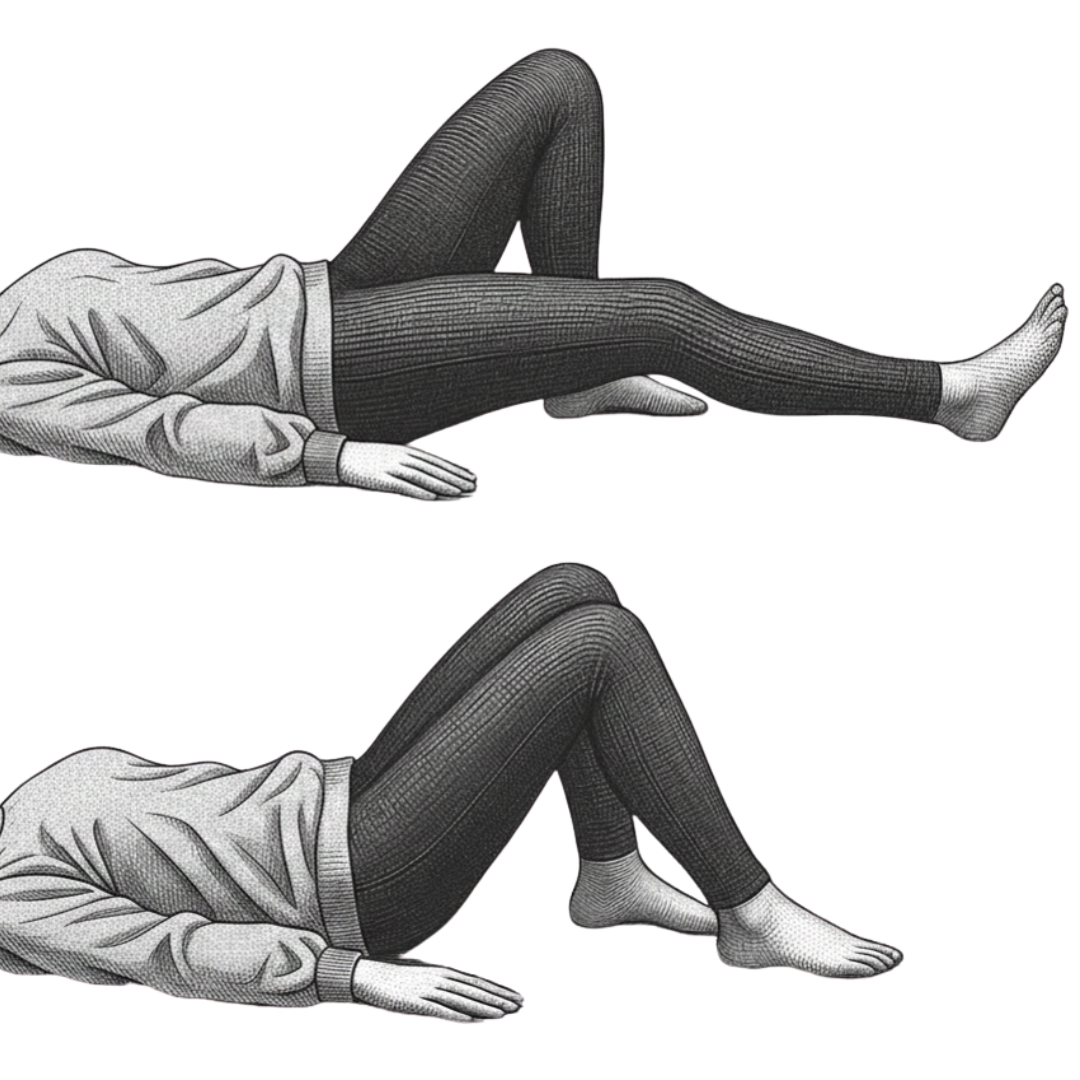
Move 1: Heel slides
Lie on your back. Knees bent. Feet flat.
Inhale into your belly.
Exhale and slide one heel away from you until your leg is almost straight.
Inhale to slide it back in.
3 sets of 10 each leg.
The exhale + the slow movement = transverse abdominis activation.
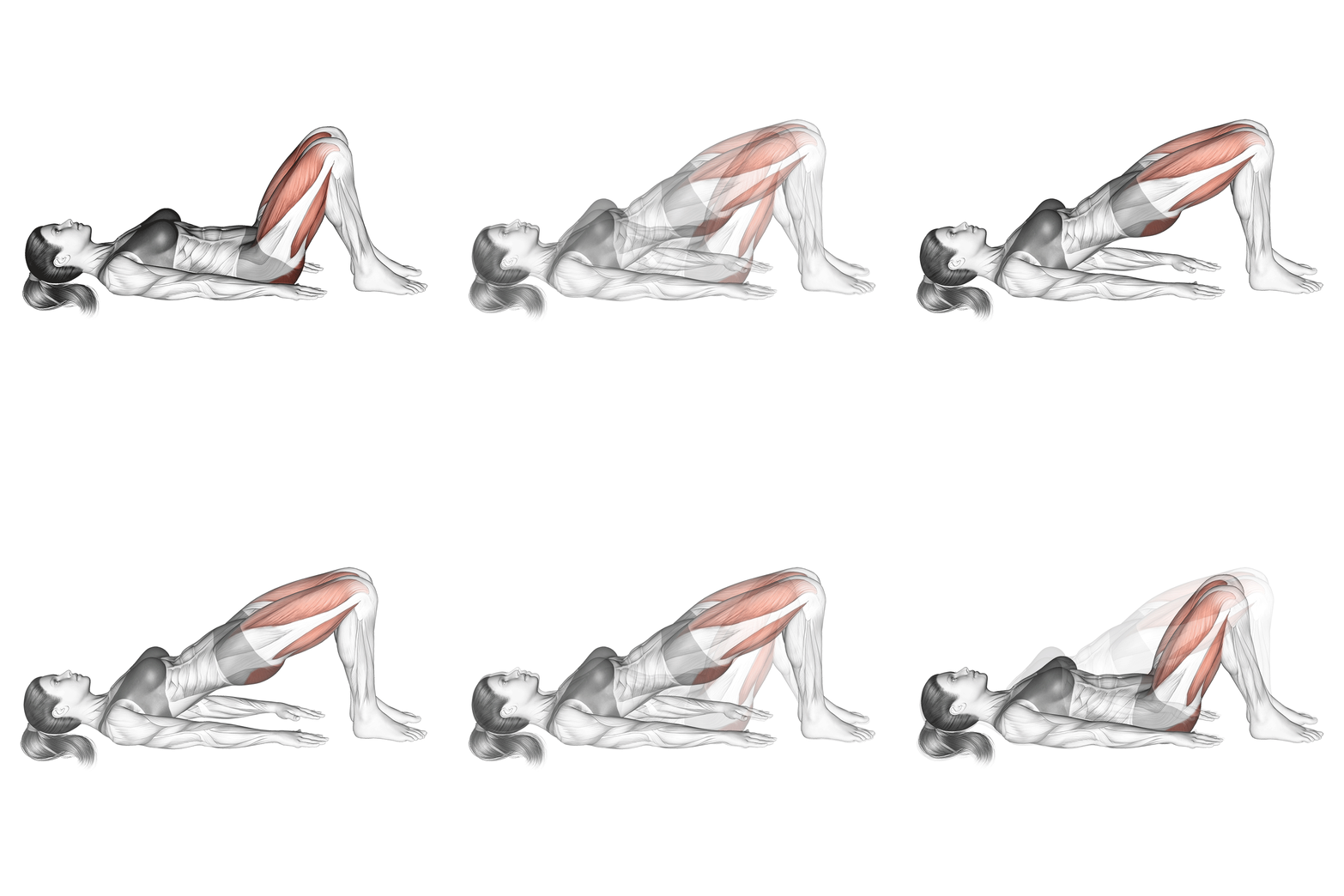
Move 2: Glute bridges
Lie on your back. Knees bent. Feet flat. Heels close to your bum.
Press through your heels. Lift your hips up.
Squeeze your glutes hard at the top. Hold for 2 seconds.
Lower slowly.
3 sets of 15.
Why: posterior chain strength supports the front. Pelvic floor wakes up. Lower back pain often eases as a side effect.
Move 3: Dead bugs
Lie on your back. Arms straight up, knees bent at 90° (tabletop).
Slowly lower opposite arm and leg towards the floor — without arching your back.
Return to start. Switch sides.
3 sets of 8 each side.
Why: core coordination + spine stability + deep core firing. The hardest of the three. Master heel slides and glute bridges first.
Where to go next (free first, paid later if you want it)
If your diastasis hasn't closed and it's been more than a year postpartum, it's not going to fix itself. But it CAN fix with the right rehab.
Step 1 (free): grab the Postpartum Recovery Reset PDF.
I've built a free 4-week postpartum rehab guide for Muslim mums, diastasis check, the 3 safe moves above with progressions, salah-anchored daily timing, and the sunnah nutrition layer most coaches miss.
→ DM me RESET on Instagram @fitsters._ and I'll send it to your DMs.
Step 2 (when you're ready for community + accountability): join Glow & Grow Mama.
My 8-week postpartum cohort. deen-led, salah-anchored, built for Muslim mums. Live weekly calls, full curriculum, 8 weeks of programming around your diastasis, pelvic floor, hormones, identity, and deen. Limited seats per cohort.
Cohort 1 enrolment opens Tue 3 June 2026. [Get on the waitlist via the link in bio.]
Step 3 (deeper transformation): 1:1 pre/postpartum coaching.
For mums who want personalised, intensive support programs depending on tier. Free discovery call to see if we're a fit.
→ DM me CALL on Instagram or book directly: Calendly
A final word.
Your body did not fail you. It built a human. It birthed a human. It fed a human. The fact that your midline needs rehab now is a feature of motherhood, not a flaw in you.
Full recovery is not linear. It takes longer than 6 weeks. It takes longer than 6 months for some of us. And it takes the RIGHT work not just any work.
Bismillah, start with the safe moves. Stop the harmful ones. And reach out when you need a real coach.
You are not behind. You're exactly where you're meant to be.
X Habibah, Fitsters